
Travertine from Balochistan is one of the most admired natural stones in luxury architecture and interior design. Known for its warm textures and timeless beauty, it has been used in buildings for centuries. Pakistan is now an important source of high-quality travertine, sourced from the rich natural deposits of Balochistan.
From the rugged mountains of Balochistan to polished slabs used in villas, hotels, and commercial buildings, the journey of travertine is fascinating. This article explores how travertine stone travels from the quarry to the factory and finally becomes a refined architectural material.
Natural Travertine Deposits in Balochistan
Balochistan is home to some of the most remarkable natural stone reserves in Pakistan. Among these resources, travertine stands out for its distinctive texture, soft tones, and natural elegance. Other premium stones like Black & Gold Marble and Onyx are also highly valued for luxury projects.
Travertine forms naturally over thousands of years through mineral deposits from flowing water. The result is a stone with unique patterns, small cavities, and warm earthy colors that make every piece visually distinctive.
Architects and designers appreciate travertine because it brings a natural and sophisticated appearance to modern spaces. From luxury villas to hotels and commercial buildings, travertine and other natural stones like Red zebra are increasingly used for both interior and exterior applications.
Quarrying Travertine: Extracting Natural Stone Blocks
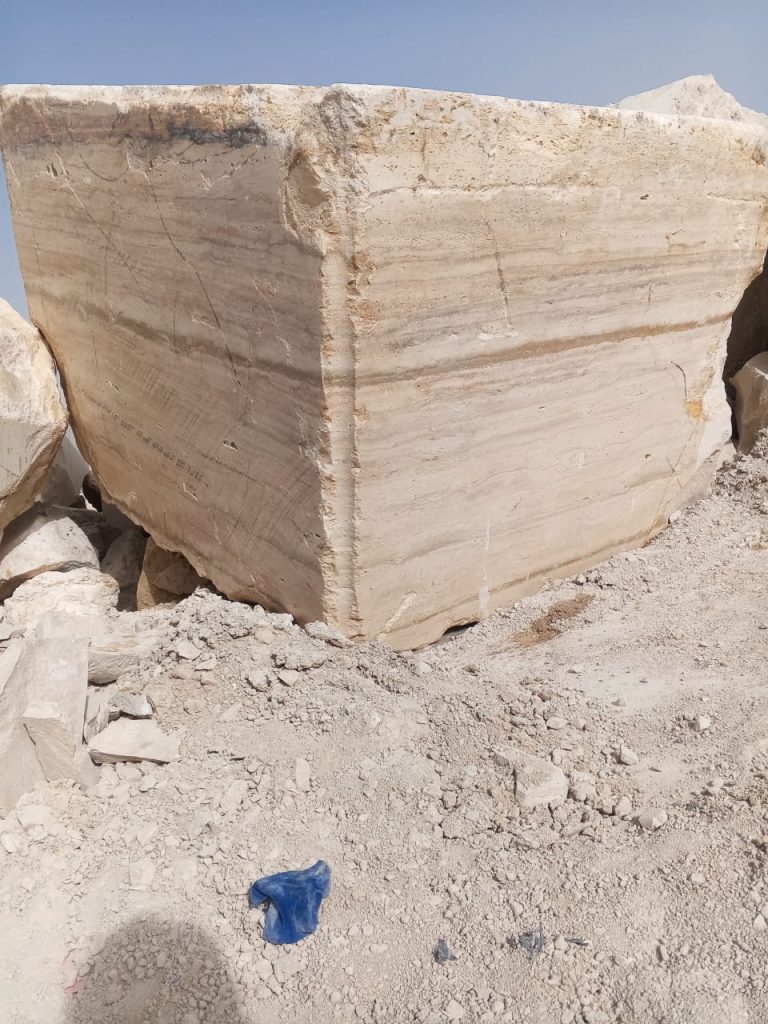
The journey of travertine begins in the quarries of Balochistan, where large deposits of stone are carefully extracted from the mountains.
Modern quarrying techniques are used to cut massive blocks of travertine while maintaining the integrity of the natural stone. Skilled workers and specialized equipment ensure that the blocks are extracted with precision.
Each block is carefully inspected for quality, pattern consistency, and structural strength. Only the best blocks are selected for processing, ensuring that the final slabs meet the high standards required for architectural projects. Similarly, other premium stones, such as Black & Gold Marble for luxury villas, undergo rigorous selection and processing to meet the exacting standards of high-end architectural projects.For premium travertine and marble slabs for villas or hotels in Oman & GCC, explore our collection or contact us today.
Transporting Travertine Blocks to the Factory
After extraction, the large travertine blocks are transported from the quarry to stone processing factories. These blocks can weigh several tons, so heavy-duty transportation and careful handling are essential.
The blocks are loaded onto trucks and moved to processing facilities where advanced stone-cutting machinery is used to transform the raw material into refined slabs and tiles.
This stage is crucial because proper transportation ensures that the natural stone remains intact and free from damage before processing begins.
From Raw Stone to Polished Travertine Slabs
Once the travertine blocks reach the factory, the transformation process begins.
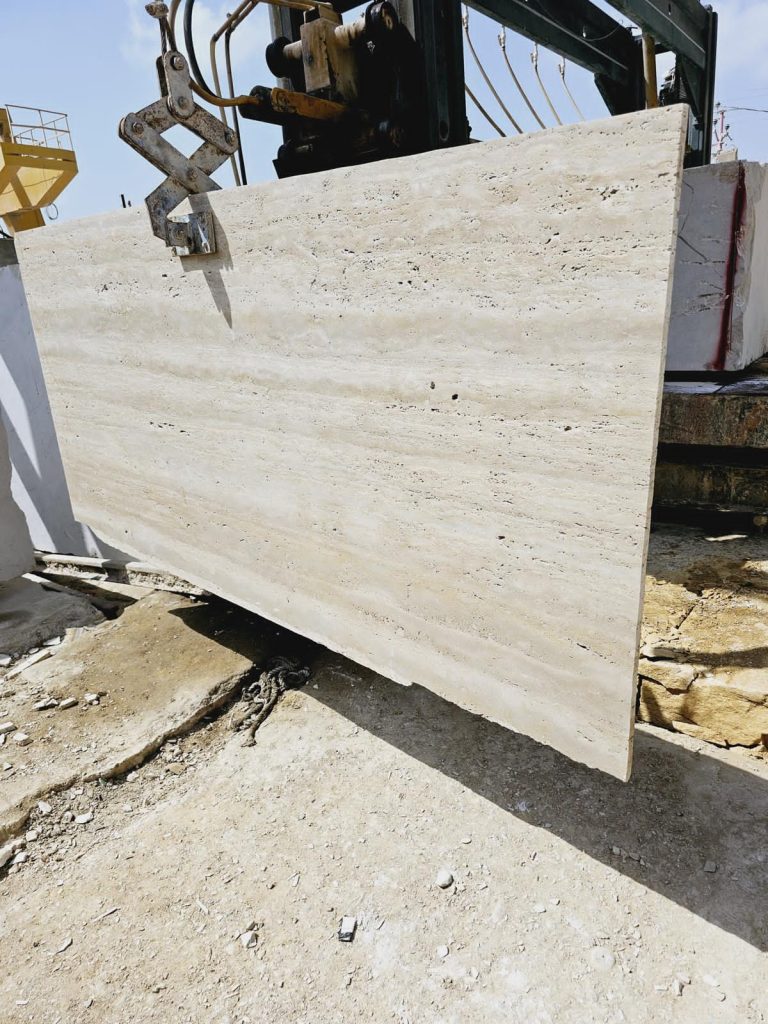
The large blocks are first cut into slabs using powerful stone-cutting machines. These slabs are then processed through multiple stages including trimming, grinding, filling (if needed), and polishing.
Polishing enhances the natural beauty of travertine by highlighting its patterns, colors, and textures. Depending on the design requirements, the surface can be finished in different styles such as polished, honed, brushed, or natural finish.
The final slabs are carefully inspected to ensure quality, uniformity, and durability before they are prepared for architectural use.
Travertine in Modern Architecture and Interior Design
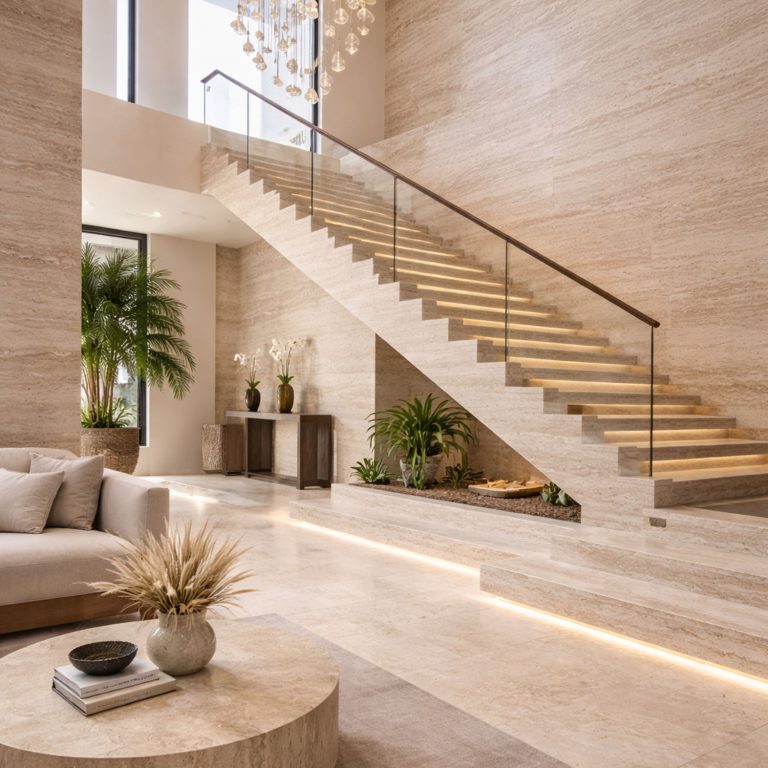
Travertine is widely appreciated in architecture because it combines natural elegance with durability. Designers often choose travertine for projects that require a timeless and sophisticated look.
Common applications of travertine include:
- Luxury villa flooring
- Interior wall cladding
- Hotel lobbies and reception areas
- Outdoor façades and landscaping
- Bathroom walls and floors
- Commercial building interiors
Its neutral tones and natural patterns make travertine a versatile stone that complements both modern and classical architectural styles.
Travertine from Pakistan for International Projects
Travertine from Pakistan offers an appealing natural stone option for architects, interior designers, contractors, importers and developers working on residential and commercial projects.
With its distinctive textures, warm tones and versatile finishes, natural travertine can complement a wide range of architectural styles, from luxury villas and hotels to contemporary commercial spaces.
Zee Stone Studio welcomes inquiries from international buyers in the USA, Canada, Australia, Europe, Oman, the UAE, Qatar and other GCC markets. Availability, product specifications, pricing and shipping options can be discussed according to each project’s requirements and destination.
For wholesale and project inquiries, buyers can request information about available travertine formats, finishes, dimensions, quantities, packaging and export arrangements.
Explore Natural Stone Sinks
Beyond slabs and tiles, natural stone can also become a striking feature in luxury bathrooms. Explore our natural stone pedestal sinks , marble vessel sinks, and onyx vessel sinks ideal for distinctive bathroom interiors in villas, hotels and residential developments. Contact Zee Stone Studio for wholesale and project inquiries.
The Timeless Appeal of Natural Travertine
The journey of travertine—from the mountains of Balochistan to refined architectural stone—highlights the remarkable transformation of a natural resource into a luxurious building material.
Whether used in villas, hotels, or commercial projects, travertine offers a unique blend of natural beauty, durability, and timeless design.
As demand for authentic natural materials continues to grow, travertine remains one of the most respected stones in the world of architecture and interior design.